
Most women can give birth vaginally, and many mothers-to-be hope for a normal delivery because recovery is usually quicker. No single tip can guarantee it — the baby’s position, the placenta and the mother’s health all play a part — but what you do during pregnancy can make labour safer and smoother. These ten normal delivery tips are based on international guidance and our experience with mothers in Pune.
1. Keep every antenatal appointment
The WHO recommends at least eight antenatal contacts during pregnancy. Regular check-ups pick up high blood pressure, high sugar, anaemia and growth problems early — while they can still be managed, rather than becoming reasons for an emergency caesarean.
2. Stay active every day
If your doctor has not advised otherwise, aim for about 150 minutes of moderate activity a week — for example 30 minutes of brisk walking five days a week. Walking, swimming, stationary cycling and prenatal yoga are good choices. Avoid contact sports and activities with a risk of falling, and stop and call your doctor if you feel dizzy, have chest pain, bleeding or leaking fluid.
3. Gain a healthy amount of weight
Gaining too much weight increases the risk of a very large baby, gestational diabetes and a longer labour. A widely used guide is:
| BMI before pregnancy | Recommended total weight gain |
|---|---|
| Under 18.5 (underweight) | 12.5–18 kg |
| 18.5–24.9 (healthy weight) | 11.5–16 kg |
| 25–29.9 (overweight) | 7–11.5 kg |
| 30 or more | 5–9 kg |
4. Eat well and correct anaemia
Anaemia is common in pregnancy in India and makes labour more tiring and bleeding after birth more risky. Eat iron-rich foods such as green leafy vegetables, dal, chana, jaggery in moderation, eggs and meat, with vitamin C (amla, lemon, oranges) to help absorption. Take the iron, folic acid and calcium tablets your doctor prescribes for the full course.
5. Keep blood sugar and blood pressure in check
Uncontrolled gestational diabetes or pre-eclampsia are among the most common reasons for an early or caesarean delivery. Go for your sugar tests on time, and learn more in our guide to gestational diabetes.
6. Strengthen your pelvic floor
Pelvic floor (Kegel) exercises — squeezing and lifting the muscles you use to stop passing urine, holding for a few seconds and relaxing — help support the baby’s weight and speed recovery after birth. Aim for a few sets every day.
7. Try perineal massage from about 34 weeks
A Cochrane review found that perineal massage from around 35 weeks reduces the chance of a tear needing stitches, mainly for women giving birth for the first time. Ask your doctor to show you how, and avoid it if you have an infection or a low-lying placenta.
8. Learn breathing, relaxation and labour positions
Antenatal classes teach breathing techniques and positions that make contractions easier to cope with. Staying upright and moving around in early labour — walking, swaying, sitting on a birth ball — can help labour progress.
9. Know the signs of labour
Coming to the hospital at the right time avoids both long waits and last-minute rushes. Read our guide to the signs of labour and when to go to hospital.
10. Plan your pain relief and birth preferences
Talk to your doctor before your due date about pain-relief options, including an epidural (often called “painless delivery”), and about who will be with you in labour. Knowing your options in advance helps you make calm decisions on the day.
When a caesarean is the safer choice
Sometimes a caesarean section is the best way to keep mother and baby safe — for example if the baby is in a breech (bottom-first) position, the placenta is covering the cervix (placenta praevia), labour stops progressing, or the baby shows signs of distress. A good care team explains why and involves you in the decision.
Frequently asked questions
Does walking help with normal delivery?
Regular walking keeps you fit for labour and helps with weight control. In early labour, walking and staying upright can help labour progress. It cannot guarantee a normal delivery, but it is one of the simplest, safest things you can do.
Does eating ghee in the ninth month help normal delivery?
No. This is a common belief, but there is no evidence that extra ghee makes labour easier. It adds calories and can lead to excess weight gain. A balanced diet is better.
Can I have a normal delivery after a previous caesarean?
Many women can. This is called VBAC (vaginal birth after caesarean). It depends on why the first caesarean was done, the type of scar, the gap between pregnancies and how this pregnancy is going. Discuss it with your doctor early in pregnancy.
When does labour usually start?
A pregnancy is full term from 37 weeks. Most women go into labour between 37 and 42 weeks; only a small number deliver on their exact due date.
Normal delivery care in Hadapsar, Pune
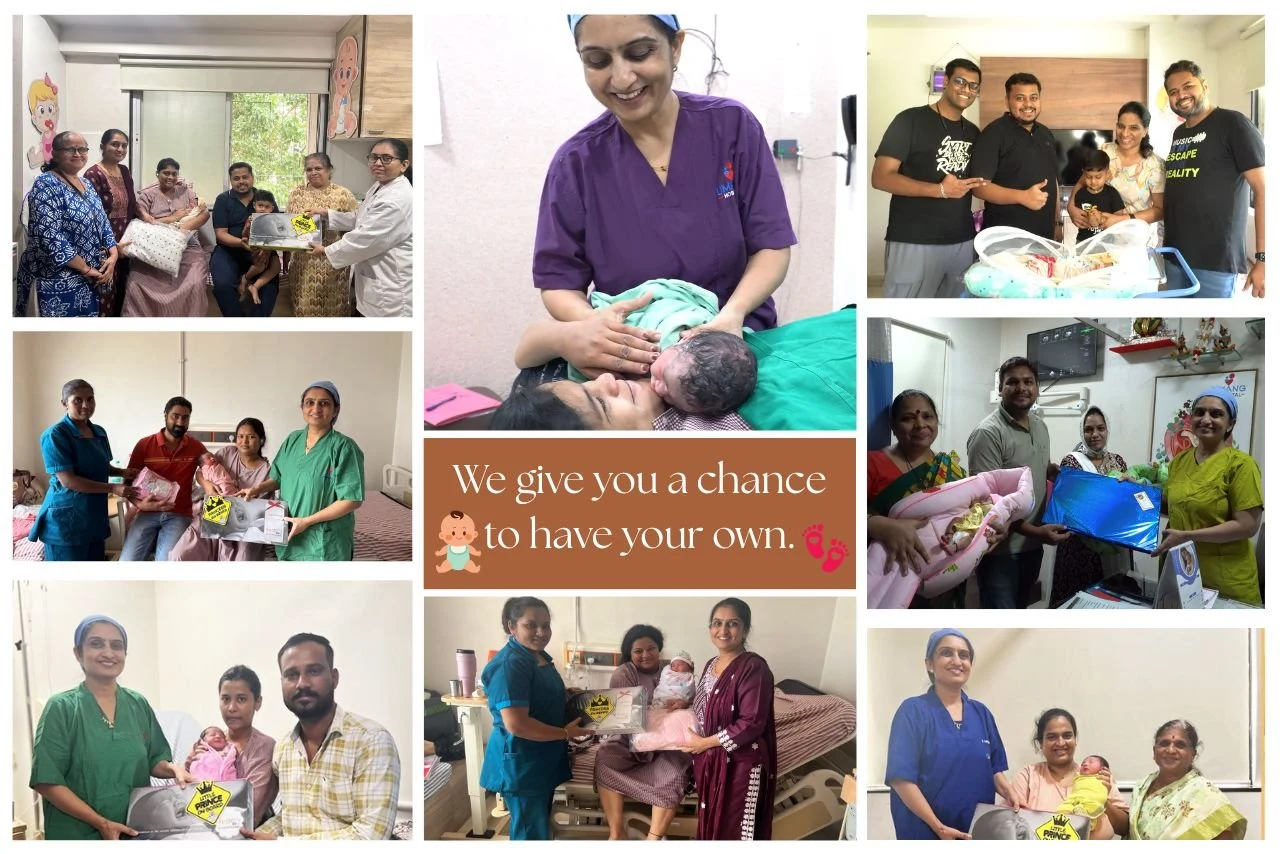
As a maternity hospital in Hadapsar, Umang Hospital has supported mothers since 2011, with a strong focus on safe normal delivery, a 24×7 labour room and newborn care. See our maternity and normal delivery service, or our high-risk pregnancy care if you have a medical condition. Message us on WhatsApp at +91 83798 58585 or call +91 98907 99898 to book a consultation with Dr. Asha Gavade. OPD: Monday–Saturday, 10 AM–2 PM.
References
- World Health Organization — Recommendations on antenatal care for a positive pregnancy experience (2016)
- ACOG — Exercise during pregnancy
- NHS — Exercise in pregnancy
- Cochrane — Antenatal perineal massage for reducing perineal trauma
- NHS — The stages of labour and birth
Medical disclaimer: this article is for general information and does not replace a consultation. Every pregnancy and every body is different — please speak to your doctor about your own situation.